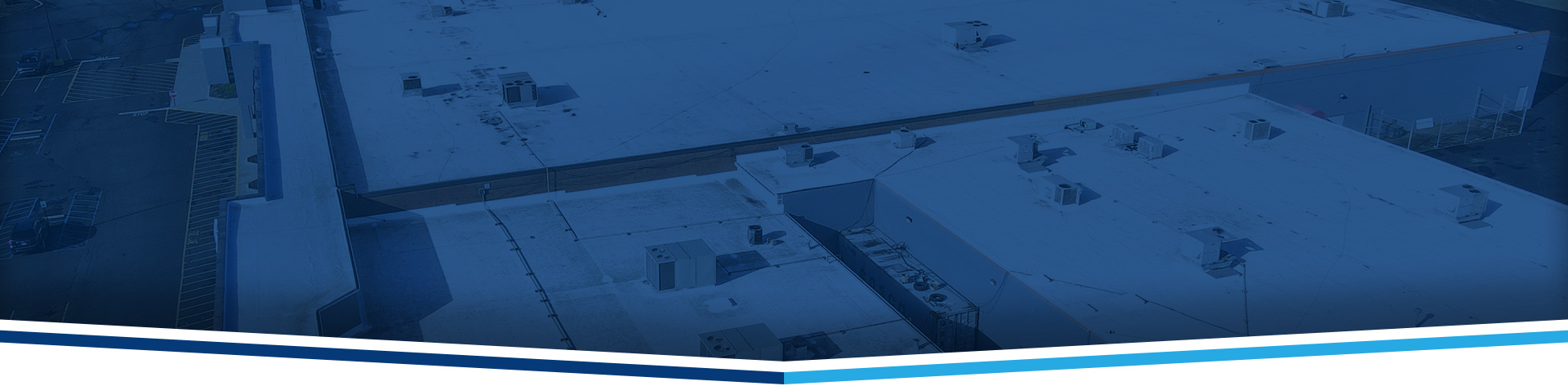
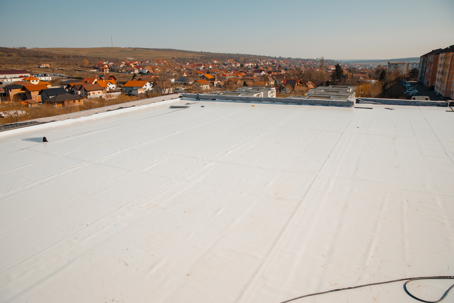
When a commercial building’s cooling bills skyrocket during the summer, most people look at the air conditioning units or the thermostat. They assume the heat is just "part of the season." In reality, the most significant drain on your budget is likely the thousands of square feet of dark material sitting directly over your head.
The Invisible Heat Source
A standard, aged commercial roof doesn't just sit on top of a building; it acts like a giant sponge for the sun. On a typical afternoon, a dark roof can reach temperatures of 180°F.
The Problem: This isn't just surface heat. That energy moves downward, soaking through the roof deck and into your workspace. Your AC isn't just cooling the air; it is fighting a ceiling that is actively trying to heat the building back up.
The Cost of a Hot Roof
This thermal pressure creates a chain reaction of expenses that go beyond a high utility bill:
- Mechanical Exhaustion: When a roof stays at extreme temperatures, your HVAC units never get a break. They run longer, harder cycles, leading to parts failing years before they should.
- Peak Demand Charges: Many utility companies charge a premium when your building pulls the most power during the hottest part of the day. A hot roof forces your system to peak exactly when electricity is the most expensive.
- Worker Productivity: In warehouses or industrial spaces, a roof that radiates heat makes the interior unbearable, regardless of what the thermostat says.
Moving from Absorption to Reflection
To fix the cooling problem, the roof must be transitioned from a surface that collects heat to one that deflects it. This is the core logic behind modern roof restoration.
Traditional dark roofs absorb the majority of the sun's energy, while a reflective restoration surface can reflect 85–90% of that sunlight away from the building. By keeping the surface temperature near the actual air temperature, you drastically reduce the heat leaking into your facility.
The Restoration Process: How it Works
A professional restoration isn't a quick fix or a coat of "cool paint." It is a specific process that changes how your building reacts to the sun.
- Industrial Cleaning: You cannot put a new surface over years of dirt and expect it to hold. The roof must be power-washed to ensure a permanent bond.
- Sealing the Gaps: Every screw and seam—the places where heat and water are most likely to get in—is individually sealed to create a unified barrier.
- The Seamless Shield: A thick, liquid membrane is applied that dries into a single, rubber-like piece. Because there are no seams, there are no places for heat to leak in.
Why This Solution Lasts
The reason this approach is replacing traditional teardowns is the chemistry. High-quality silicone is inorganic. Unlike the materials used in old-school roofs, it doesn't "cook" or get brittle in the sun. It stays flexible, meaning it can stretch and shrink with the building for decades without cracking.
Stop Paying the Sun Tax on Your Facility
By focusing on the structural integrity of what you already have, you can achieve a leak-free, energy-efficient environment that supports your business goals rather than disrupting them. At Seamless Roofing, we specialize in technical solutions that save our clients from unnecessary expenses. Our primary expertise lies in silicone roofing restoration, a process that creates a waterproof, reflective barrier without the noise or waste of a tear-off. We also provide specialized metal roofing, EPDM roofing, and TPO roofing services to ensure every commercial building gets the exact protection it needs for its specific roof type.
Get the facts about your roof before you commit to a full replacement. Connect with Seamless Roofing online or call (317) 699-4463 to speak with our team about a technical audit for your facility today.